Take a photo of a barcode or cover
4.03 AVERAGE
4.03 AVERAGE
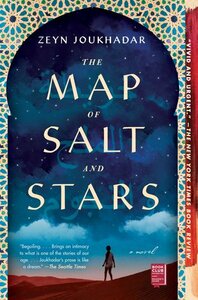
After her father dies, Nour and her family move back to Syria. There, their house is attacked and they have to flee the country as refugees. Her story is intertwined with that of Rawiya, an apprentice mapmaker, during the 12th century that happens to be her father's favorite tale.
Very enjoyable listen with a great narrator. The two stories intermingle in interesting ways. Gives gutwrenching views of life in Syria and as a reguee
Very enjoyable listen with a great narrator. The two stories intermingle in interesting ways. Gives gutwrenching views of life in Syria and as a reguee

adventurous
challenging
emotional
inspiring
lighthearted
sad
tense
medium-paced
Plot or Character Driven:
Character
Diverse cast of characters:
Complicated

The most important quote from the book to me: “Wealth is no substitute for belonging.”

adventurous
emotional
slow-paced
Plot or Character Driven:
A mix
Strong character development:
Yes
Loveable characters:
Complicated
Diverse cast of characters:
Complicated
Flaws of characters a main focus:
No

Plot-wise, this book is riveting and contains such a real and pressing driving force, split between the two characters of Nour and Rawiya. Its closeness with history and the geographic reality/unreality vis a vis the fluidity of borders and place names gives it a weight. Nour’s sister, Huda, also reminds me of someone I know. And so, my main issue with this book is the writing style. Granted, Nour has synesthesia which explains the preoccupation with colour, but it’s a struggle to visualize in the way it is meant. I’m not a graphic-visual person and therein lies the rub.
adventurous
emotional
hopeful
medium-paced
Loveable characters:
Yes
emotional
reflective
sad
medium-paced
Plot or Character Driven:
A mix
Strong character development:
Yes
Loveable characters:
Yes
Diverse cast of characters:
Yes

emotional
hopeful
inspiring
reflective
sad
medium-paced
Plot or Character Driven:
Character
This is a novel about brave women. There are male characters, but the women do most of the brave deeds: Nour in the modern story and Rawiya in the ancient one. A refreshing change.
Bakr, the male apprentice in the ancient story, seems present merely to be a foil to Rawiya: he is fearful where she is brave; he overlooks answers while she figures them out. He does have a few moments of slightly more development, but after his death he is barely missed. Zahra with her attitude at first seems only a foil to the more caring Huda. However, she does get more fully developed around the middle of the novel.
The language can get obtrusive. Having Nour be synesthetic inserts color into sound descriptions in a disruptive way. At least it does become an important detail 3/4 of the way through. And as the novel progresses, it is used less. Only enough to remind us of the feature.
The narrative structure is pleasing. I especially enjoy modern intertwined with early history, or ven parallel histories. Actually they intertwine only occasionally. And the look at the life of a refugee is important for out times. I did feel that the modern story, with all its struggles and few losses, ended up too neatly completed. The ancient story was more mythic in nature, so its unconvincing happy endings was less intrusive.
Bakr, the male apprentice in the ancient story, seems present merely to be a foil to Rawiya: he is fearful where she is brave; he overlooks answers while she figures them out. He does have a few moments of slightly more development, but after his death he is barely missed. Zahra with her attitude at first seems only a foil to the more caring Huda. However, she does get more fully developed around the middle of the novel.
The language can get obtrusive. Having Nour be synesthetic inserts color into sound descriptions in a disruptive way. At least it does become an important detail 3/4 of the way through. And as the novel progresses, it is used less. Only enough to remind us of the feature.
The narrative structure is pleasing. I especially enjoy modern intertwined with early history, or ven parallel histories. Actually they intertwine only occasionally. And the look at the life of a refugee is important for out times. I did feel that the modern story, with all its struggles and few losses, ended up too neatly completed. The ancient story was more mythic in nature, so its unconvincing happy endings was less intrusive.

Story of a Syrian Family as they leave their beloved country. All the complications that they face seem insurmountable and yet Family and old folk tales keep them going.